
Authorities on Sunday temporarily suspended the Amarnath Yatra in Kashmir as well as the pilgrimages to the Mata Vaishno Devi and Shiv Khori shrines in Jammu after the India meteorological department (IMD) forecast of widespread rainfall across the Union Territory over the next few days.

The death toll from devastating flash floods in Nepal has surged to 1,050, with nearly 4,000 people, including foreigners and security personnel, still missing. Rescuers are struggling with intermittent rainfall, rising river levels, and difficult terrain, while expert teams from India and China assist in operations, particularly at hydropower project sites where many workers are believed to be trapped in tunnels.

The southwest monsoon has intensified across India, bringing heavy to extremely heavy rainfall and prompting red alerts for several states, alongside concerns over landslides and urban flooding.

Several districts in Uttar Pradesh experienced rainfall, with Kanpur City recording the highest precipitation. The India Meteorological Department reported a drop in temperatures across the state, including Lucknow, and issued a forecast for continued rain in western UP.
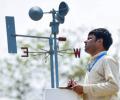
'This system will be of immense help in agricultural planning, disaster management and water resources management.'

Northern states in India are experiencing severe heatwave conditions, with temperatures reaching up to 46.6 degrees Celsius. The heatwave has impacted daily life, leading to a decline in tourism and increased power demand. Authorities have issued advisories and implemented measures to mitigate the effects of the extreme heat.

Kerala's Wayanad district is under a red alert due to very heavy rainfall and a landslide at the Kalladi tunnel project site, resulting in one confirmed death, seven hospitalised, and seven missing. Neighbouring Kozhikode is also under a red alert, with orange alerts for other districts. Evacuation efforts are underway, and the landslide pushed a bus into a river.

A landslide in Maval tehsil, Pune district, has buried a house, with three family members feared trapped. Rescue operations are underway by NDRF and police, while heavy rainfall has also caused waterlogging and partial closure of the Mumbai-Pune Expressway.

Nepal's former Forest and Environment Minister Madhav Prasad Chaulagain has expressed concern over the lack of timely information exchange with China ahead of the devastating floods, stating that the disaster's scale could lead to an 'unbelievable' rise in the death toll.

The India Meteorological Department (IMD) has forecasted an early onset of the southwest monsoon over Kerala, expected around May 26. This marks the beginning of the crucial rainy season for India.

Nepalese authorities have issued a flood alert for central, western, and eastern parts of the country as water levels in major rivers like Sun Koshi, Budhi Gandaki, Mahakali, and Marsyangdi have crossed alert and danger levels due to continuous monsoon rainfall, urging residents to remain vigilant.

Uttar Pradesh is experiencing an intense heatwave, with Banda recording the highest temperature at 47.6 degrees Celsius. The IMD has issued a 'Red Colour Warning' for severe heatwave conditions. The extreme heat is disrupting daily life and economic activity, prompting government action to prevent heat-related illnesses.

Olympian and World Cup gold medallist archer Jayanta Talukdar and his one-month-old twin babies were rescued from their flood-hit apartment in Guwahati's Rukmininagar on Friday.

Water levels were even lower than the 10-year average in 27 reservoirs in eastern India and around 47 in southern India.

The India Meteorological Department has issued a 'red' alert for Mumbai, Thane, and Raigad districts, forecasting heavy to very heavy rainfall and strong winds. Residents are advised to avoid unnecessary travel, and warnings include potential flash floods, structural damage, and disruptions to essential services. The Brihanmumbai Municipal Corporation has also urged caution and deployed officials to monitor the situation.

India's peak power demand reached an all-time high of 257.37 GW on Monday, driven by increased use of cooling appliances during an intense heatwave, according to power ministry data. The Indian Meteorological Department has forecast continued heatwave conditions in northwest and central India.

Heavy monsoon rains have caused widespread havoc across Arunachal Pradesh, leading to floods, landslides, and significant damage to infrastructure. Rescue operations are underway in multiple districts, with casualties reported and many displaced. Connectivity remains severely disrupted, and authorities have issued warnings as more heavy rainfall is forecast.

Several parts of India are experiencing a severe heatwave, with temperatures soaring past 44 degrees Celsius. States are issuing alerts and taking measures to protect people and animals from the extreme conditions.

Several districts in central and south Gujarat received heavy rainfall on Friday with over 1,500 persons evacuated to safer places in Surat which is the worst-affected, officials said.

The death toll from flash floods in central Nepal has surged to 734, with nearly 2,500 people still missing. India has intensified its rescue and relief efforts, sending additional aid, technical teams, and forensic experts, while also working to locate and rescue over 275 missing Indian nationals.

Indian benchmark stock indices, Sensex and Nifty, experienced a significant decline for the third consecutive day, with the Sensex tumbling 1,092 points and Nifty closing below 24,550. This downturn was primarily driven by the India Meteorological Department's forecast of a below-normal southwest monsoon and ongoing geopolitical uncertainties surrounding the US-Iran ceasefire arrangement.

Following Jharkhand Chief Minister Hemant Soren's decision to cancel the JSSC-CGL exam and other recruitment tests due to alleged irregularities, approximately 2,000 successful candidates now fear losing their jobs, demanding a CBI probe and a fair opportunity to defend themselves.

With the southwest monsoon stalled over southern Maharashtra, India is facing a nationwide rainfall deficit of 41 percent between June 4 and June 18, according to the latest India meteorological department (IMD) data.

Nepal has issued a fresh flood warning for areas previously hit by a devastating flash flood, as water levels rise and a dam on the Tibetan side reportedly burst again. Authorities are urging residents and rescue workers to evacuate, with concerns over a newly formed barrier lake near the Nepal-China border posing a significant risk.

The heavy rains that have battered Kerala since August 1 have claimed 25 lives, left four people missing, injured 10 and damaged hundreds of properties, forcing thousands to seek shelter in relief camps, the state government said on Tuesday.

The devastating flash floods wreaked havoc across Nepal, with the ministry of external affairs on Thursday stating that 84 Indian nationals have been rescued while 290 remain uncontactable as the Himalayan nation stepped up search, rescue and relief operations following the disaster that has claimed more than 390 lives.

Rising mercury levels in Madhya Pradesh are causing sleepless nights for residents as minimum temperatures remain high. Doctors report an increase in sleep-related issues, allergies, and fatigue due to the heat.

Rising mercury levels in Madhya Pradesh are causing discomfort for residents as night temperatures fail to provide relief, disrupting sleep patterns and daily routines.

The Centre has reviewed the monsoon situation, noting a reduced rainfall deficit and ongoing preparedness for the kharif season amidst El Nino concerns. A high-level meeting chaired by the Principal Secretary to the Prime Minister discussed measures across various sectors, emphasising continuous monitoring and coordinated action to mitigate potential impacts on agriculture, water resources, and essential commodities.

Kerala Chief Minister V D Satheesan on Sunday said that eight people have died, an equal number are missing and 13 were injured in the previous day's heavy rains which caused property damage, landslides and waterlogging in many parts of the state.

Dilip Buildcon Ltd, the contractor for the Anakkampoyil-Kalladi-Meppadi road tunnel project in Wayanad, attributed a recent fatal landslide to exceptionally heavy rainfall. The company stated that the project adheres to all safety and environmental protocols, despite allegations from Kerala Ministers of a "man-made disaster."

Many places across northern states including Delhi recorded above-normal temperatures crossing 40 degrees Celsius, while the India Meteorological Department warned of heatwave conditions in parts of Uttar Pradesh in the coming days. Jammu and Kashmir saw a dip in temperatures with fresh snowfall in the higher reaches and rainfall in the plains.

Monsoon rains have unleashed widespread destruction across India, claiming seven lives in Himachal Pradesh and Karnataka due to landslides and floods, while heavy downpours have disrupted normal life and triggered red alerts in Maharashtra and other regions.

Kerala Chief Minister V D Satheesan announced that the death toll from rain-related incidents has reached 15, with seven people still missing. He confirmed that the overall situation is under control, except for a few areas in Pathanamthitta, as the state intensifies rescue and relief operations. The CM detailed the deployment of rescue teams, functioning relief camps, and immediate compensation measures for victims and affected families, while also cautioning against rumours regarding dam water release.

The death toll from devastating flash floods in Nepal has surged to 1,252, with more bodies recovered and fresh flood risks emerging due to continuous rainfall in the Bhotekoshi River's upstream areas. The disaster, triggered by an ice-rock avalanche, has also left 4,875 people missing and prompted calls to address climate change's impact on the Himalayan region.

The monthly average rainfall over India is expected to be below normal during July, the India Meteorological Department said on Tuesday in its monthly forecast.

The India Meteorological Department has issued a red alert for Mumbai, forecasting extremely heavy rainfall and gusty winds over the weekend. The city has already experienced over 100 mm of rain in the last 24 hours, leading to delays in local train services, though public transport remains operational.

Mumbai is experiencing intense monsoon activity, with over 100 mm of rainfall recorded in 24 hours, leading to widespread waterlogging and two tragic rain-related deaths, as the India Meteorological Department forecasts continued heavy to very heavy showers and gusty winds.

Two young men were killed by a lightning strike while travelling to a temple near Mahakala village in Jalna district, Maharashtra. Another person was injured in the incident. The tragedy occurred during unseasonal rains in the region.

Gujarat has reported 35 rain-related deaths in the past two days, primarily in the worst-affected districts of Valsad and Navsari, as floodwaters recede and authorities initiate damage assessment surveys and post-flood cleanliness drives.
